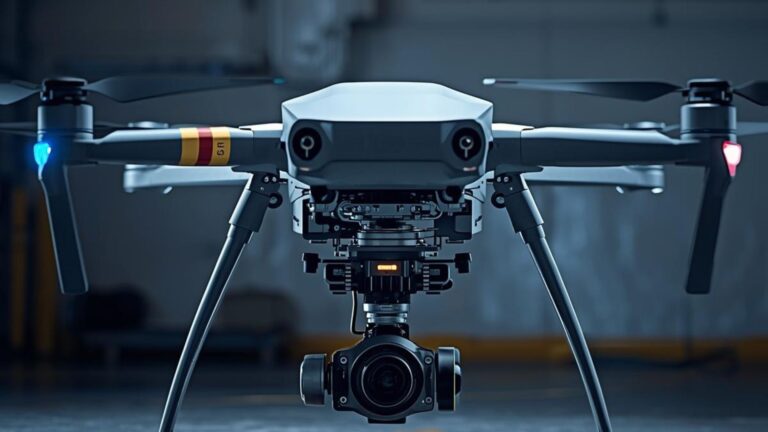
Imagine a malicious actor taking over one of your drones mid-flight, or stealing the live feed from a drone’s camera, or infecting your fleet management software with malware – these events can lead to costly damage, both financially and reputationally.
Unique cyber threats in the drone industry
- Drone hijacking: Hackers might attempt to seize control of your drone or disrupt its communication link. In a worst-case scenario, a bad actor could redirect a drone to crash or to spy on unauthorized areas. Beyond the immediate damage, this raises liability questions – clients or third parties could claim your system’s security was inadequate.
- Data theft and privacy breaches: Drones often collect sensitive data (surveillance footage, mapping data of critical sites, etc.). If your storage servers or in-flight data streams are compromised, that information could fall into the wrong hands. A data breach could lead to regulatory fines (for example, under privacy laws) and lawsuits from affected clients. Even losing high-resolution imagery of a client’s facility could be considered a serious security lapse.
- System outage due to cyber attack: If attackers deploy ransomware or DDoS attacks on your drone operations center or software platform, you might suddenly be unable to control your fleet or deliver services. For a drone delivery or inspection company, every hour of downtime can mean lost revenue and unhappy customers. Cyber insurance can help cover those financial losses in a way standard property insurance would not.
- Supply chain vulnerabilities: You might trust third-party components or software in your drones. If one of your suppliers has a hidden security flaw (or worse, a deliberate backdoor) that leads to a breach in your system, you could still be on the hook. For instance, if a navigation software SDK you integrated gets compromised and causes a security incident for your clients, they may still hold you responsible as the primary contractor.
What does cyber insurance cover for a drone tech firm?
A strong cyber policy typically provides:
- Incident response services: As soon as a breach or attack is discovered, the policy funds immediate help – IT forensics experts to find and contain the threat, legal advisors for regulatory compliance, public relations support to manage communications, and notification costs if you must inform customers or partners of a data breach.
- Third-party liability: This covers legal claims or regulatory penalties if others are harmed by a cyber incident affecting your company. For example, if client data is leaked or if your compromised system is used to attack a client’s network, cyber insurance will cover settlements, judgments, and defense costs.
- Business interruption: If a cyber event (like ransomware or a network intrusion) forces you to halt operations, the policy can reimburse lost income and extra expenses incurred to keep your business afloat during downtime. For a drone operations company, this could cover things like contract penalties for missed deliveries or the cost of bringing in emergency backup systems.
- Cyber extortion (ransomware): If hackers lock up your data or threaten to disrupt your services unless you pay a ransom, cyber insurance will typically cover the ransom payment (subject to insurer approval and legal considerations) and the services of experienced negotiators. It also covers the cost of system restoration and data recovery after an attack.
One area we pay attention to is cyber-induced physical damage. Not all cyber policies automatically cover bodily injury or property damage caused by a cyber attack (for example, a hacked drone causing a crash). This is a gray area – sometimes it’s excluded under cyber policies and left for aviation insurance, which might in turn exclude cyber events without endorsement. As brokers who understand both sides, we can help secure endorsements or specialized policies that bridge that gap, ensuring you’re not caught in a blame game between insurers if a cyber incident leads to a physical accident.
Coordination with Tech E&O
There’s a natural overlap between cyber insurance and Technology E&O for drone companies. Cyber insurance focuses on malicious acts (hackers, malware, etc.), whereas E&O covers mistakes and negligence on your part. In a complex claim situation – say a client sues you for negligence after a breach, alleging you failed to implement proper security – both policies might come into play. The E&O could cover the negligence lawsuit, while the cyber policy covers the immediate response costs and maybe regulatory fines. Having both coverages with coordinated terms ensures you’re fully protected no matter how a cyber-related event unfolds. We often negotiate with insurers to clarify how E&O and cyber will interact to avoid gaps or disputes.
In the drone industry, a cyber incident can be as damaging as a crash. It can ground your fleet, break your customers’ trust, and even invite government scrutiny. Cyber insurance, tailored for your specific risk profile, acts as a financial shield and a crisis management tool. Our team stays up-to-date on evolving threats – from GPS spoofing defense to data encryption standards – and works with top cyber insurers who understand high-tech and aviation convergence.
If you’re unsure whether your current insurance addresses cyber threats, or if you need guidance on improving your cyber resilience, let’s talk. We’ll help integrate a cyber insurance solution into your overall risk management so that your drone venture is protected in the digital skies as well as the physical ones.